
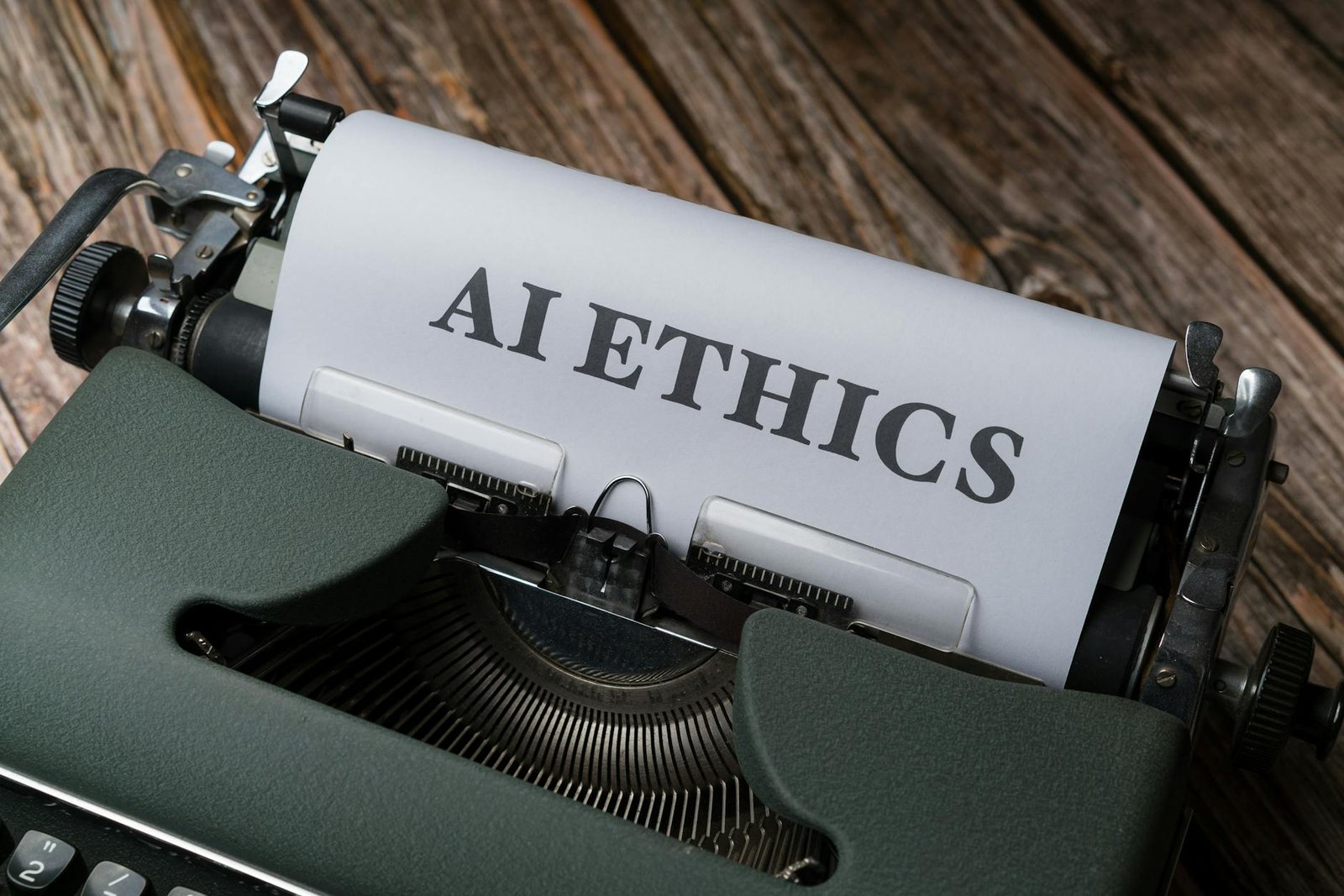
The Ethical Implications of AI in Healthcare and Beyond
Estimated reading time: 6 minutes
- Understanding the impact of biased algorithms in healthcare.
- The balance between AI adoption and ethical standards.
- Strategies for responsible AI integration in business.
- The consequences of poor AI implementation.
- Exploring opportunities for small and mid-sized businesses.
Table of Contents
- The Ethical Threshold: AI in Healthcare and Beyond
- What’s Driving the Adoption of AI Tools?
- Think Before You Automate
- The Cost of AI Missteps
- Smaller Businesses: A Cautionary Tale
- Rethinking Workflow Automation
- Expert Assistance in AI Integration
The Ethical Threshold: AI in Healthcare and Beyond
The notion of AI as an unbiased assistant is as misleading as it is enticing. The healthcare sector isn’t the only domain grappling with the fallout from biased algorithms, but it’s one of the most striking examples due to its potential to impact lives directly. Reports from the Chief Healthcare Executive highlight that AI healthcare tools with embedded biases should be pulled. Who decides what is deemed “biased”? Herein lies the real dilemma.
Tech companies race to deliver solutions that promise efficiency at the expense of thorough testing and accountability. For instance, an AI system that predicts patient outcomes might work marvelously for one demographic but could fail catastrophically for another due to its training data’s lack of diversity. If you’re in healthcare, how do you ensure that AI doesn’t just enhance your service but does so ethically? Those questions spiral quickly when lives are at stake.
What’s Driving the Adoption of AI Tools?
Despite the ethical quandaries, AI technology adoption is accelerating, creating an arms race among companies eager to remain competitive. Businesses are investing heavily in AI solutions with the expectation of cutting costs and boosting productivity. According to a report by McKinsey, companies that adopt AI stand to increase their cash flow by 10-20% in the next five years. But before you jump on the bandwagon, consider this: the road to sustainable AI implementation is littered with pitfalls.
Imagine you run a ten-person agency specializing in marketing. You’ve just acquired an AI-powered tool that analyzes consumer behaviors and optimizes campaigns in real-time. Sounds perfect, right? But what happens when your AI solution starts producing results that misrepresent certain market segments? Your clientele might not even notice the missteps until it’s too late—what you thought was a smart strategy could turn into a PR nightmare.
Think Before You Automate
It’s easy to fall into the trap of over-reliance on technology. Automation can amplify your capabilities, sure. But it can also lead to blind spots, where data-driven decisions overlook critical human insights. A Harvard Business Review article points out that 80% of companies reported improved efficiency after implementing AI, but many struggled with integrating AI into a broader business strategy. The issue isn’t just about the tool itself; it’s about how you think around it.
You might start incorporating AI tools into some business processes, assuming they will revolutionize productivity. But here’s the kicker: if your organization isn’t prepared to adapt its workflow, you could find yourself in a tangled mess of inadequately trained models and skewed results. So, before you rush into automation, ask yourself: What does my business truly need?
The Cost of AI Missteps
One of the more sobering realities for businesses deploying AI tools is the potential backlash from missteps. Take, for instance, the story of a well-known insurance company that integrated AI into its underwriting process. The algorithm they deployed learned from past data—but it learned the wrong lesson. Rather than fairly evaluating applicants, it perpetuated existing biases, resulting in unfair premium pricing for certain demographics. The fallout? A public relations disaster and significant regulatory scrutiny.
This situation highlights the cost of singing praises for AI without understanding its limitations. It’s crucial for you to consider how AI decisions will affect not just your bottom line, but also your company’s reputation. Are you prepared to face potential public outcry if your AI systems fail to account for fairness and equity?
Smaller Businesses: A Cautionary Tale
For small and mid-sized businesses, the stakes are even higher. Larger corporations may have the resources to weather the storm of a poorly executed AI strategy, but what about you? Consider an up-and-coming e-commerce startup that integrates an AI tool to predict inventory needs. One miscalculation—and you’re left with either surplus stock or angry customers due to delays. This isn’t just a number in your spreadsheet; this is your brand’s trust on the line.
Moreover, smaller businesses may not have the luxury of a dedicated AI ethics officer to review your algorithms. You need to take an active role in understanding the tools you adopt and ensure they align with your values. A commitment to ethical AI is not only necessary for the right reasons; it could also be a differentiator in a crowded market.
Rethinking Workflow Automation
So, where does AI automation fit into all of this? Automation tools like n8n can simplify many of your business processes, making them more cohesive and manageable. But don’t let the hype around these tools overshadow the need for mindfulness in deploying them. An automated workflow can improve responsiveness or data tracking, but if the underlying processes are flawed to begin with, automation merely amplifies those flaws.
A thoughtful approach can pave the way for smarter operations. Implementing AI tools means investing in the training of your team, developing robust data practices, and ensuring regular audits of your systems. You don’t want to wake up one morning to discover your team is relying on a souped-up calculator that doesn’t calculate accurately.
In this context, understanding not just what automation can do but how it aligns with your company’s long-term strategy is vital. Recognize that the best tools afford you the opportunity to innovate rather than simply conform.
Expert Assistance in AI Integration
As you explore AI and automation, the experts at AI TechScope are here to help you navigate this landscape responsibly. Whether you’re looking for AI-powered automation solutions or n8n workflow development, they can guide you in implementing systems that are ethical, efficient, and designed for long-term success.
Making informed decisions when it comes to AI adoption isn’t just smart—it’s essential. Your business, your reputation, and perhaps even the well-being of your customers depend on it. So, as you ponder your next steps into the world of automation, ask the hard questions and be prepared to pivot. AI might promise a future of efficiency, but that future is only as good as the principles you build it on.
FAQ Section
What are the risks of implementing AI in business?
AI implementation can carry risks such as biased algorithms, data privacy issues, and reliance on technology without human oversight.
How can small businesses benefit from AI?
Small businesses can leverage AI for enhanced efficiency, better customer insights, and optimized operations, but must proceed with caution to avoid pitfalls.
What is the importance of ethical AI?
Ethical AI is crucial in ensuring fair, transparent, and responsible usage of technology that does not perpetuate biases or harm vulnerable populations.