
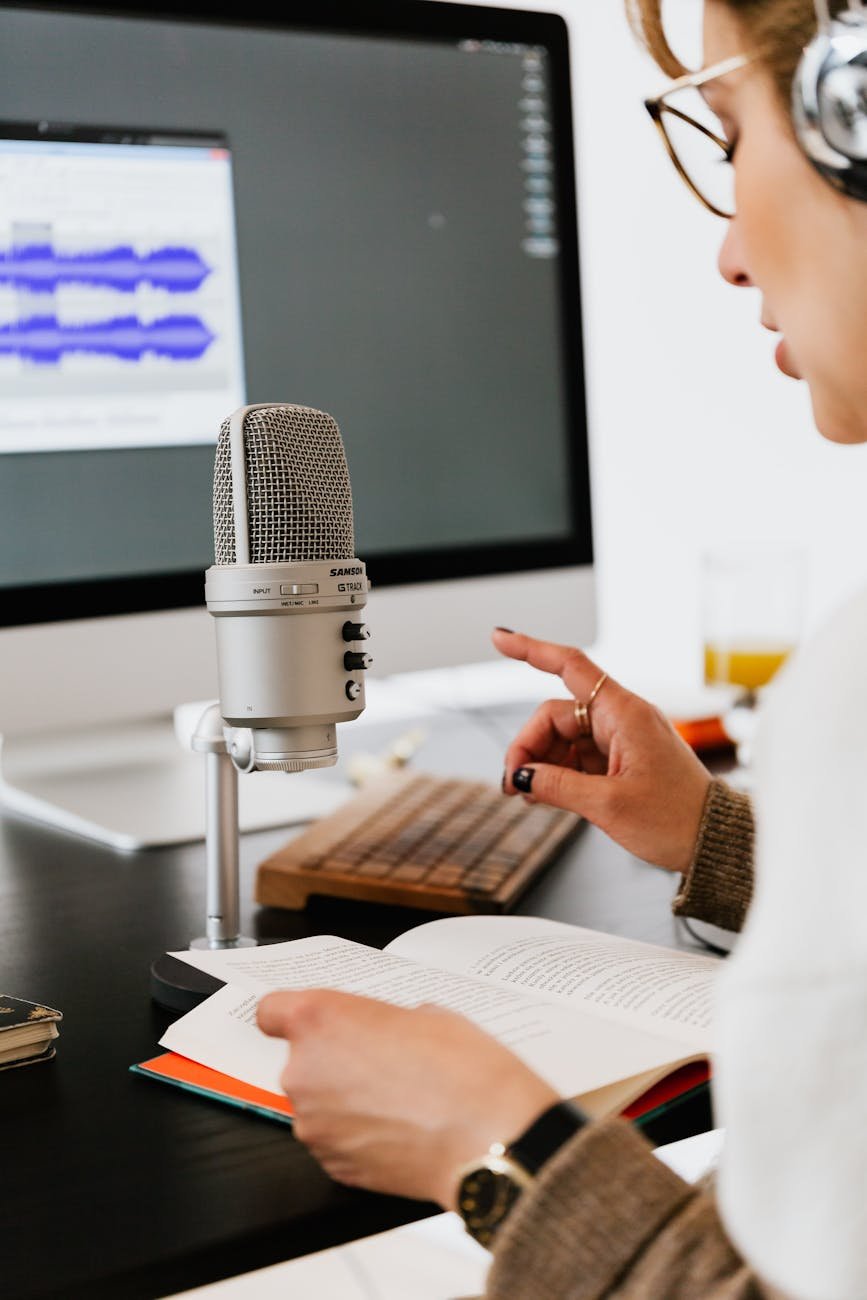
The Evolution of Audiobook Production: How AI is Changing the Game
Estimated reading time: 6 minutes
- AI is projected to significantly shape storytelling methods.
- AI-driven technologies allow authors to produce audiobooks more efficiently and cost-effectively.
- AI can augment creativity rather than replace human effort.
- Automation tools help businesses streamline operations, enabling greater creative focus.
- Adapting to AI technologies is crucial for future business competitiveness.
Table of Contents
- The Surge of AI in Content Creation
- AI’s Narration Landscape
- Compelling Narratives without Restrictions
- The Creative Shift for Small to Medium Enterprises
- AI Automation & Workflow Tools
- Provoking Thought on AI Narration
The Surge of AI in Content Creation
If you’re skeptical about the role AI plays in creative processes, you’re not alone. However, dismissing it outright could mean missing out on tremendous benefits. Traditionalists believe that narration, like any good art, needs a human touch. Something about the nuances of tone and emotion feels irreplaceable, right? But here’s the kicker: AI doesn’t aim to replace human narrators; it aims to augment and expand the possibilities of storytelling.
AI’s Narration Landscape
Take, for instance, the partnership between ElevenLabs and Spotify, which had its big moment recently. They’re not just letting technology narrate; they’re letting it create. An author can now produce their own audiobook without stepping foot in a studio or hiring a voice actor, all while retaining creative control. Imagine you run a small publishing house. The ease of audio production could drastically change your business model. No more waiting weeks for narrators or blowing the budget on studio time. Instead, authors can focus on writing and let AI handle the narration. Authors become production team members, and publishing can pivot to more innovative, consumer-focused outputs.
Compelling Narratives without Restrictions
And don’t forget the cost aspect. Traditional audiobook production can run tens of thousands of dollars. Producing via AI is comparatively inexpensive. Imagine you’re an up-and-coming author with a solid fan base but limited funds. Now, you can get your audiobook out there without risking your stash. Plus, the speed at which you can publish and distribute content increases exponentially.
As AI expands the storytelling landscape, it will foster diverse voices that may have previously struggled to reach audiences. But it also complicates the space. As any seasoned businessperson knows, quality assurance must be your mantra. An AI can generate content but can also fall flat; ensuring the output meets your standards will be your responsibility.
The Creative Shift for Small to Medium Enterprises
Is automation rewriting the rules for small and mid-sized businesses? Definitely. But it raises pertinent questions. What does it mean for creative professionals when machines become part of their toolkit? While some might scream “the machines are coming for our jobs,” I see it differently. AI isn’t the enemy; it’s the extra pair of hands you didn’t know you needed.
Consider a scenario where a small marketing agency wants to produce multiple video ads quickly. By integrating AI tools, teams can focus on the creative aspects while the software handles mundane tasks like generating script drafts or voiceovers. This relationship can enhance creativity rather than stifle it.
When looking at infrastructure, smaller businesses must weigh the cost against potential revenue. The initial investment in AI tech can be daunting, but when you consider how much more you can produce, it could very well lead to a healthier bottom line.
AI Automation & Workflow Tools
Now, let’s talk about automation. While some might consider AI tools as a crutch, they can instead be seen as a lifeline. Many businesses are already integrating AI into workflow tools like n8n, which streamlines various tasks. AI can take care of labor-intensive processes while the human creative mind focuses on innovation. You want to scale without losing that personal touch, right? That’s how you get ahead of the curve.
AI automation tools can help balance the workload, allowing your team to tackle more projects simultaneously. Think of how much time you spend on operational tasks. Now imagine AI freeing you from some of those burdens. With automation, you could actually expand your creative endeavors and flourish in environments where you traditionally felt constrained.
Provoking Thought on AI Narration
Here’s where I challenge the mainstream view: the idea that human narration is superior might not hold as strongly as it once did. Sure, a human narrator brings skill and experience, but AI’s ability to analyze countless texts means it can adapt narratives to fit audience preferences like never before. While no one is suggesting we jettison human talent, businesses should ask themselves whether leaning purely on traditional methods is sustainable long-term.
It’s essential to have a critical view—what matters is not whether the narrator is a machine but whether the story resonates with the audience. Sometimes, a manufactured voice might do just that.
As we stand at this intersection of technology and creativity, the verdict is still out on whether AI-generated content will truly rival human narration. But isn’t that part of the excitement? The possibilities, both good and bad, are endless.
FAQ
What is AI in content creation?
AI in content creation refers to the use of artificial intelligence technologies to assist in generating, editing, and producing content such as text, audio, and video.
How does AI affect audiobook production?
AI streamlines the audiobook production process by enabling authors to generate narrations without traditional studio resources or voice talent, reducing time and costs.
Can AI replace human narrators?
While AI can produce narrations, it is designed to enhance rather than replace human narrators, as the emotional nuances in storytelling often require a human touch.