
The Magic of AI: Transforming Business Potential
Estimated Reading Time: 6 minutes
Key Takeaways:
- Investing in AI tools can yield significant returns, averaging 300% within two years.
- Automation through AI is critical for operational efficiency and competitive edge.
- AI can streamline mundane tasks, allowing employees to focus on strategic initiatives.
- Small to mid-size businesses can leverage AI solutions without massive budgets.
- Human-AI collaboration drives innovation and enhances team performance.
The Rise of AI-Powered Automation in Business
Forget the hype for a moment. Let’s focus on the straightforward fact: AI is fundamentally reshaping how we operate. More businesses are beginning to embrace automation, especially in tasks that drain time and resources. If you’re still allocating numerous hours to manual tasks, you’re not just missing out on efficiencies; you’re also risking your competitive edge.
Many companies are now combining customer relationship management with AI-driven chatbots and analysis tools. Consider the way an online retailer streamlines inventory management: AI systems track customer preferences, predict trends, and manage stock levels autonomously. This isn’t wishful thinking; it’s happening at scale.
Did you know that brands like Sephora are harnessing AI for personalized beauty recommendations? By analyzing customer data and preferences, they can suggest products with pinpoint accuracy. So, what about your business? Can it predict customer needs just as effectively? You should be asking yourself these tough questions now.
Automating Mundane Tasks
Let’s get practical. Imagine you run a small digital marketing agency with a team of ten. Every day, your staff is swamped with routine tasks—scheduling posts, tracking ad performance, compiling reports. It’s not glamorous work, and it eats up time that could be better spent on strategic planning or creative projects.
Here’s where AI helps put the fire back in your team’s belly. Tools like n8n come into play, allowing you to automate those mundane workflows without needing to write a line of code. With n8n, you can create workflows that automatically post on social media whenever you publish a new blog post or send performance metrics to your team every Friday morning.
Relying on these tools frees up your team’s manpower dramatically. When you automate these repetitive tasks, you’re scaling operations—not just slashing costs. It’s about telling your people that their time is valuable. And while some might argue that automation displaces jobs, I’d contend it enhances roles and creates avenues for higher-level thinking.
The Human-AI Collaboration
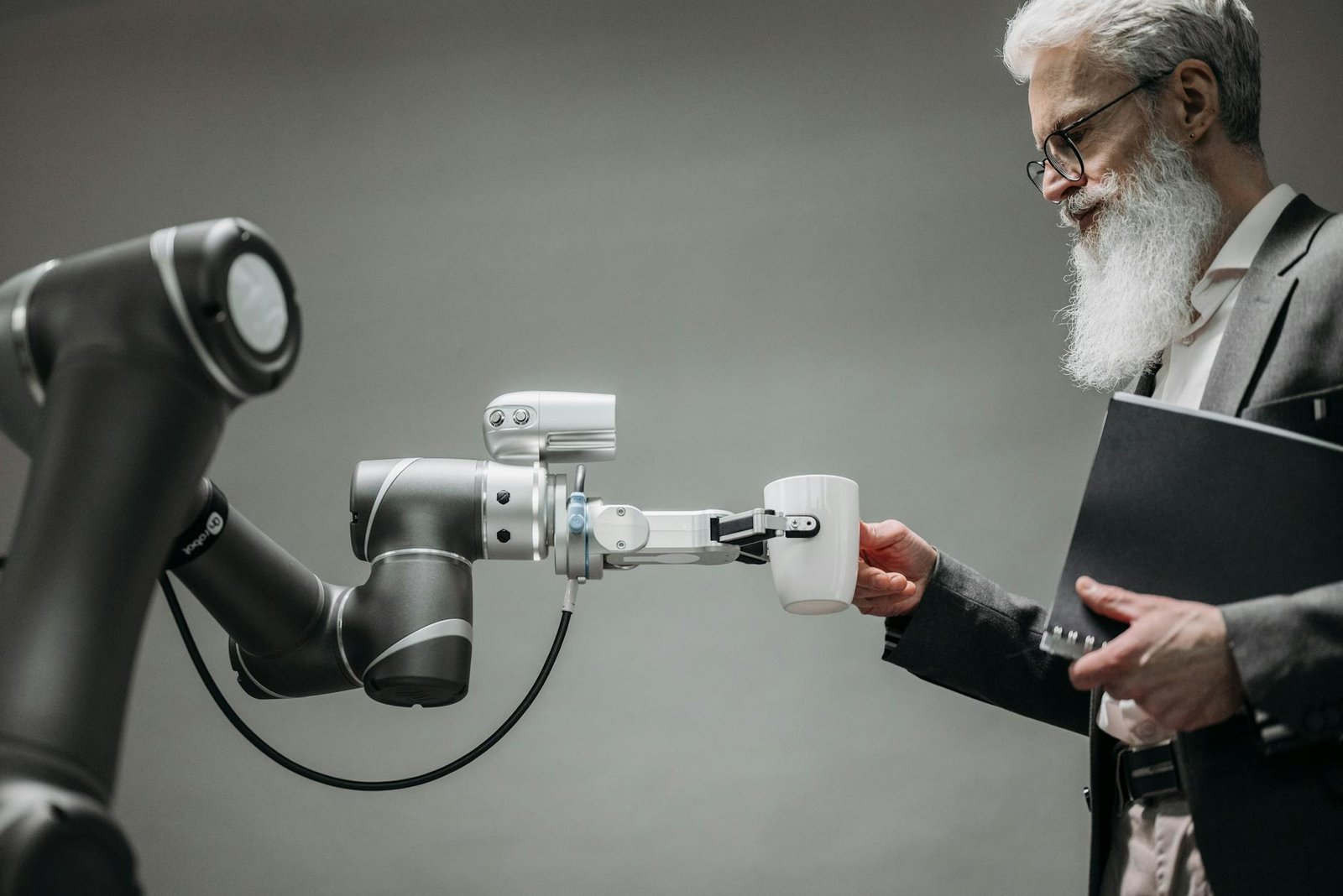
This brings us to the next critical insight: the importance of human-AI collaboration. Yes, we hear countless stories about AI replacing jobs, but we don’t talk enough about how it can augment human capabilities. Look at IBM’s Watson. While it makes headlines for outperforming humans in specific tasks, it’s also been utilized in healthcare, assisting doctors in diagnosing diseases. The outcome? Improved patient care and more informed healthcare professionals.
You might think, “That’s fine for tech giants, but I work in a different sector.” But consider this: Just like IBM, smaller businesses can also use AI to complement their workforce rather than compete against it. For instance, a small legal practice might employ AI to sift through and analyze contracts, freeing lawyers to focus on client interactions.
Here’s the kicker: when human insight pairs with AI analysis, the results can explode creativity and innovation. Don’t think of AI as a replacement; think of it as an enhancement tool that allows your team to shine.
What This Means for Small to Mid-Size Businesses
Now, let’s get to the heart of the matter for small and mid-size businesses. You might be thinking that AI investments are reserved for the big players, but you’d be mistaken. Scalable solutions are accessible now more than ever, allowing you to play at a competitive level without breaking the bank.
According to a study by Deloitte, 62% of small businesses reported that investing in AI tools led to measurable increases in productivity and revenue. Ignoring these advancements could mean letting larger competitors sweep away a share of the market that could otherwise be yours.
Are you prepared to dive into AI but feel overwhelmed by options? One pragmatic approach is to start small. Identify one or two specific tasks that you or your team routinely grapple with, and look for AI tools that tackle those problems directly. The key is to test the waters without diving headfirst into an ocean of choices.
You could start with simple automation like email follow-ups. Using tools that connect your email system with your calendar, you can ensure timely responses without lifting a finger. Once you see that success, you can scale to more complex solutions that integrate multiple facets of your operations.
Finding Your Workflow Sweet Spot
Rather than just using automation for efficiency’s sake, start designing workflows with a clear business outcome in mind. Whatever tools you’re drawn to—be it Zapier, n8n, or something else entirely—what matters is how they can improve the everyday decisions in your business.
AI doesn’t operate in a vacuum. The most fruitful uses emerge when you optimize your workflows with AI capabilities. Picture your business as a finely tuned machine—every component needs to work harmoniously. As you design this setup, keep your objectives at the forefront.
That said, AI tools should complement existing frameworks, not complicate them further. I’ve seen too many businesses fail at automation simply because they attempted to apply a cookie-cutter approach. Is this technology right for your unique context? Only you can decide.
Connecting to Automation Tools
When you consider integrating these AI-driven solutions, resources like AITechScope can guide you in the right direction. We’re not just about selling tools; we’re about making the marriage between human capability and automation successful. Our team focuses on identifying the right workflows that you need to optimize, ensuring it all fits together without the hassle.
Rather than leap into the void, consider a measured approach to automation. The intersection between your staff’s genius and AI’s efficiency can yield remarkable outcomes.
While we’ve explored various facets of AI’s role in business optimization, the overarching message remains clear: embrace AI not as a foe but as a trusted ally. It’s okay to be skeptical of trends; just ensure your skepticism is rooted in practicality and not fear.
As you relentlessly pursue growth and operational efficiency, remember that your willingness to adapt can dictate your ultimate success. And if you haven’t started exploring these AI tools yet, maybe it’s time for a chat with someone who can help illuminate the path forward.
FAQ
Q: What are some examples of AI tools I can use?
A: Examples include n8n for workflow automation and Zapier for connecting applications to automate tasks effortlessly.
A: Examples include n8n for workflow automation and Zapier for connecting applications to automate tasks effortlessly.
Q: Are AI tools only for large businesses?
A: No, AI tools have become increasingly accessible for small to mid-size businesses, offering scalable solutions.
A: No, AI tools have become increasingly accessible for small to mid-size businesses, offering scalable solutions.
Q: How can I start integrating AI into my business?
A: Begin by identifying specific repetitive tasks that can be automated and research tools that can assist with those tasks.
A: Begin by identifying specific repetitive tasks that can be automated and research tools that can assist with those tasks.
Q: Will automation displace my employees?
A: While automation can change job roles, it often enhances them by allowing employees to focus on higher-level tasks.
A: While automation can change job roles, it often enhances them by allowing employees to focus on higher-level tasks.
Q: How do I know if AI is right for my business?
A: Assess your current operations and determine if there are tasks that can be optimized through automation or AI assistance.
A: Assess your current operations and determine if there are tasks that can be optimized through automation or AI assistance.